
A Direct Message
To the Florists
We are concerned with your existence. And that concern drives everything we are building.
To the florists across America, and in the several other countries we are now in conversation with — thank you. Your voices have shaped this from the beginning; what we're building was built with you, not just for you. And to those of you picking up the phones to reach other florists in your state, your region, your country — you understand what's at stake. You are doing the hard work for flower shops everywhere, and it does not go unnoticed. To all other flower shops, please pick up the phone now! Help with the effort. Thank you!
✓ Who We Support
The independent flower shop. New, small, or long established. Any shop where flowers are the business and somebody on staff knows them by name.
Not Our Focus
Supermarket floral departments. Operations selling mainly to other businesses rather than to the public. Order gatherers with a listing and no cooler.
We Are Concerned With Your Existence
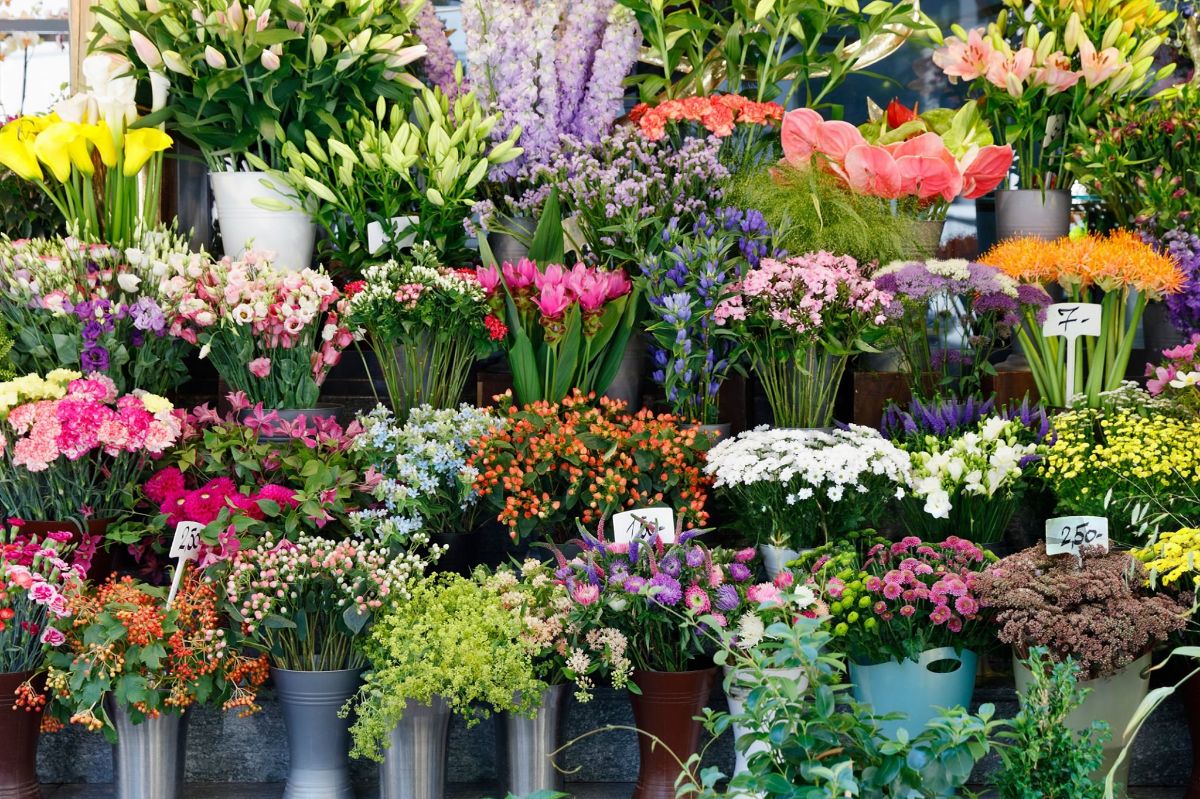
Here at World Cut Flower Commission, we are concerned with florists — meaning their existence. Flower shops have been closing for decades. Not in every country — in some, traditional shops are growing. But in America, the single largest force taking business away from your shop is sitting on the corner of nearly every neighborhood: the local supermarket.
Our commission is entirely focused on marketing the flower shop — on creating ways to bring people through your door. We believe the traditional, independent flower shop must succeed, and we intend to help make that happen. It starts with one honest test. Most florists believe they rank better than they do, because they only ever search from behind their own counter — and Google knows where that phone is. A private window does not change it. What your customers actually see is in your Google Business Profile performance report: how many people found you, and what they searched to get there. Most shops are in front of fewer people than they think.
"The supermarket did not win the everyday bouquet by being better. It won by being in front of people. Our job is to put you in front of them."

Who We Are Here For
We are here for the new flower shop. The small flower shop. The long-established shop with a passion for the craft and limited resources to shout about it. Those are the businesses we are building this for, and those are the businesses this industry cannot afford to lose.
There is no shortage of lists of real local florists. Look at who owns each one. The largest is run by a wire service. Another charges a shop several hundred dollars a year to appear on it. The marketplaces take a percentage of every order they send you. The trade association's directory is a list of the shops that pay it dues. None of them are dishonest about it — but every one belongs to somebody who makes money when the flowers move, and that makes it a poor place for a customer to check whether a shop is real.
Florists have tried to draw this line before. In 2011, four shop owners formed Florists for Change to fight fake "local florist" advertising, and in 2012 they applied to trademark REAL LOCAL FLORIST. The application was abandoned the next year, when the trademark office's questions went unanswered. Today the phrase is a software company's logo and a paid directory's tagline. The words survived. Nobody was left standing behind them — no written standard, nobody checking, nobody answering for it. That is what the Commission is for.
We take no order and no commission. We send you customers, not orders. What happens after they walk in is yours — no cut, no filler fee, no terms attached. Being on the list is free, and paying us does not move you up it. We have nothing to sell the customer standing at your door, which is the only reason that customer should believe us about you.
And the definition is not ours. Florists write what a flower shop is, and the Commission gets no vote on it. Every other list in this industry was drawn by somebody standing outside the shop. This is the first one drawn by the people inside it.
Anyone Remember Buzz the Bee?
In 1996 a cartoon bee named Buzz went on television telling America to buy more flowers. He belonged to PromoFlor, a national flower promotion program created by an Act of Congress in 1993 and paid for by an assessment on the trade's largest handlers. People liked Buzz, and the program's own research said the ads were working: more households buying flowers, and $6.60 in extra sales for handlers for every advertising dollar.
It did not matter. In June 1997 the handlers voted it out, and Buzz was gone after about eighteen months on the air. Florists had almost no say in any of it. The PromoFlor Council had 25 seats, and three went to retail florists. When the vote came that ended it, florists did not get a ballot.
In 2021 the idea came back under a new name: the U.S. Floral Board, a proposed national promotion order paid for by growers and importers and run by a board of six growers and six importers. PromoFlor gave florists three seats out of 25. The new one gives them none. Florists would not pay into it and would not vote on it. Five years later, it has still not come to a vote.
Even if it passes, it cannot do what florists need. In 1998, University of Florida economists studied PromoFlor and found that advertising the flower is "outlet neutral." It grows flower sales without shifting customers from the supermarket to the flower shop. What did move customers to florists was advertising for florists. But an industry that sells to supermarkets and flower shops alike can only advertise what they all sell: the flower. Its answer today is to market the feeling — how flowers make you feel, wherever you bought them. It will never market the shop, or the person in it. It was never built to.
And flower shops are still closing.
Our answer is to market the person behind the flowers, the one standing closest to the customer. That is you.
What I Speak Flowers™ Gives Your Shop
The Standard
A written definition of what a flower shop is: trained staff, fresh stock on a schedule, flowers as the business. Florists write it.
The List
Every shop that meets the standard, searchable by postal code, anywhere in the world. Free to be on, member or not. Nobody buys a better spot.
The Mark
A decal for the window of every qualifying shop, handed over at a local meeting. A grocery cooler cannot put it in the window.
The Campaign
Member money, pooled and spent getting customers to the list, in search, on social media, and in the AI answers people ask first.
This Is Not About
Replacing the Industry's Marketing
The industry's marketing sells the flower, and it should keep doing it. Every campaign that makes someone want flowers is good for every florist. We are not here to replace any of it. We are here to fill the one gap nobody is filling: marketing the flower shop.
You could call this the next PromoFlor, and we would be proud of that. But PromoFlor only ever ran in America, and this does not need to be one. There is no Act of Congress to pass and nobody to assess. There are enough florists in the world to pay for their own marketing — florists' money, pooled, spent on florists, in every country that sells a flower.
And it will not look like Buzz. The days when the answer was a TV commercial are mostly behind us. Could a flower shop ad run during a Super Bowl or a World Cup one day? Yes. But the real opportunity for this whole industry today is social media — along with search, maps, and the AI assistants people ask before they ever pick up a phone. That is where we are putting the effort: getting you found, and getting people through your door.
What we want to change is a habit. Today plenty of people buy flowers wherever they happen to be standing. We want asking a florist to be the normal thing to do, the way people ask a butcher for the right cut or a wine shop for the right bottle. And the reason to ask is the thing a flower shop works hardest at and the industry has never advertised: what you know. The names, the care, the season, the right flower for the moment. That knowledge is the product nobody has ever marketed. We intend to.
The trade has been saying the same thing since 1917: Say It With Flowers. It is 109 years old, and it still works. But it tells the customer to send a flower. It says nothing about the person who knows them. It is time for a refresher — and for the florist to speak for themselves. I Speak Flowers, worldwide.
None of this touches how you buy. You keep buying from the people you buy from today. We are building this so everyone wins.
"Florists defined by florists. Nobody else in this industry can say that."
Your Greatest Weapon: Education
For a long time the answer was simple. A grocery store could sell a flower, but it could not tell you anything about it. That is changing. The supermarket is catching up.
Grocery stores are doing weddings and funerals now. Harmons in Utah designs both. Publix and H-E-B sell wedding flowers with a consultation. Kroger advertises casket sprays. One Texas grocer told Floriexpo its service, "from births to weddings to sympathy," is what "sets us apart from the flower shop next door." How much longer should florists wait to do something?
Look at Floriexpo, the largest floral trade show in North America. Its advisory board is made up mostly of grocery floral buyers, and not one independent flower shop sits on it. Its organizers describe the board's job as being "the voice of the high-volume buyer." Its Floral Bootcamp is training built for supermarket and mass-market floral buyers and their teams. The Society of American Florists is one of its brand partners.
The grocery store is learning to talk about flowers. So the knowledge behind your counter has to get stronger, and faster.
A new employee takes months to learn the flowers and years to learn them well. In the meantime they are standing in front of a customer who has just asked a question. That is why we are building the Cut Flower App: the grower's knowledge, in the hands of the people who work in flower shops. Point a phone at the bucket and the answer is there. It does not replace a trained florist. It gets your staff to useful faster. It is built for flower shops, and grocery stores will not have it. They will not have I Speak Flowers either — a standard for what a flower shop is was never going to describe a supermarket.
What the App Gives Your Staff
Flower Identification by Photo
Point a phone at a flower and get its name, so a new employee never guesses in front of a customer.
Correct Flower Names & Varieties
The grower's real variety names, not made-up shelf labels.
Grower Origin
The farm, the country, the grower. The story that makes a stem worth more than a price sticker.
Seasonal Availability
What is in season and when it peaks, from the people who grow it.
Care & Vase Life
How to condition each variety and how long it lasts.
Substitutions That Work
When a variety comes up short, what holds the same shape, color and vase life.
The Grower's Own Words
What the farm says about its own varieties, in your staff's hands. Information moving, not orders.
Knowledge Is the Difference
A customer should leave your shop knowing more than when they walked in: the name of what they bought, where it came from, how to keep it. That is the part of this trade nobody else can sell, and it is what I Speak Flowers puts in the window.
We are doing our part. Now we need florists to do theirs. Look online for yourself. Look at the numbers. Look at the direction this industry is moving. You are needed today to help stop the decline of flower shops all over the world.
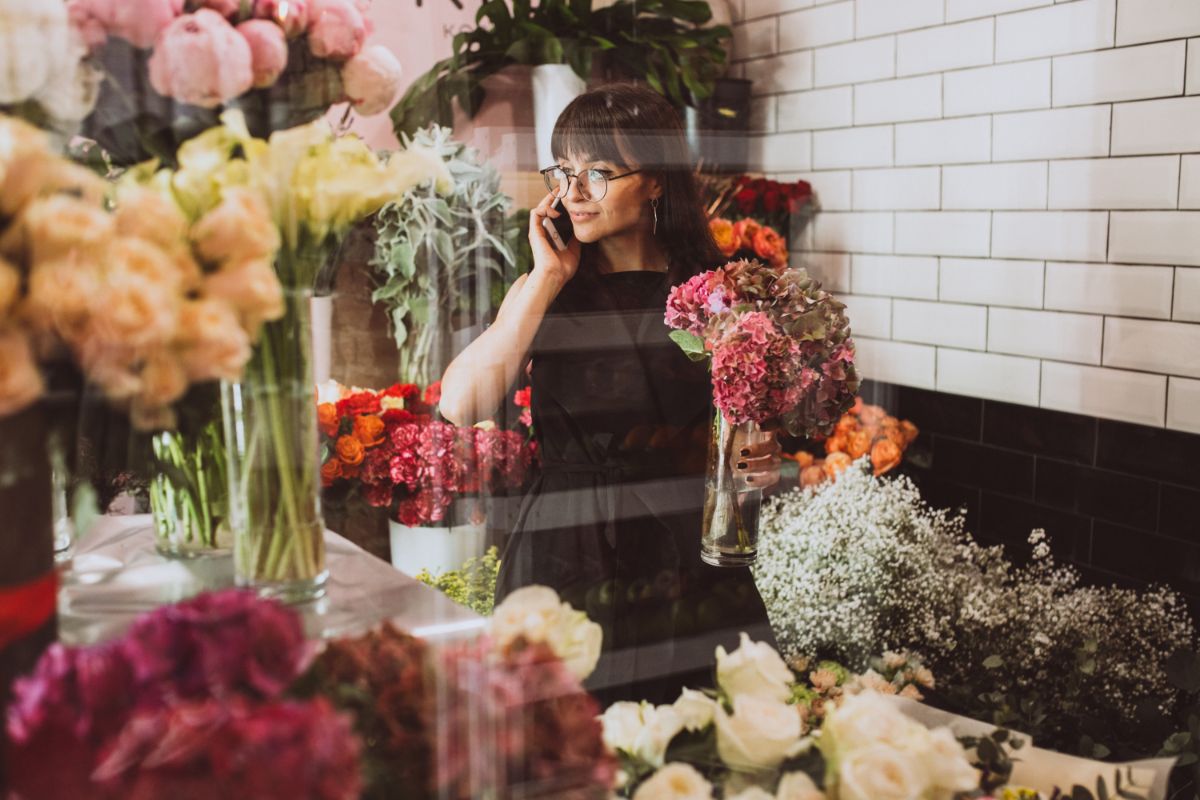
In full support of the flower shop
Register as a Florist
Join the founding group of flower shops. Ask when the I Speak Flowers meeting in your area is, and be part of the change that brings customers back through your door.
- © 2026 World Cut Flower Commission. All rights reserved.